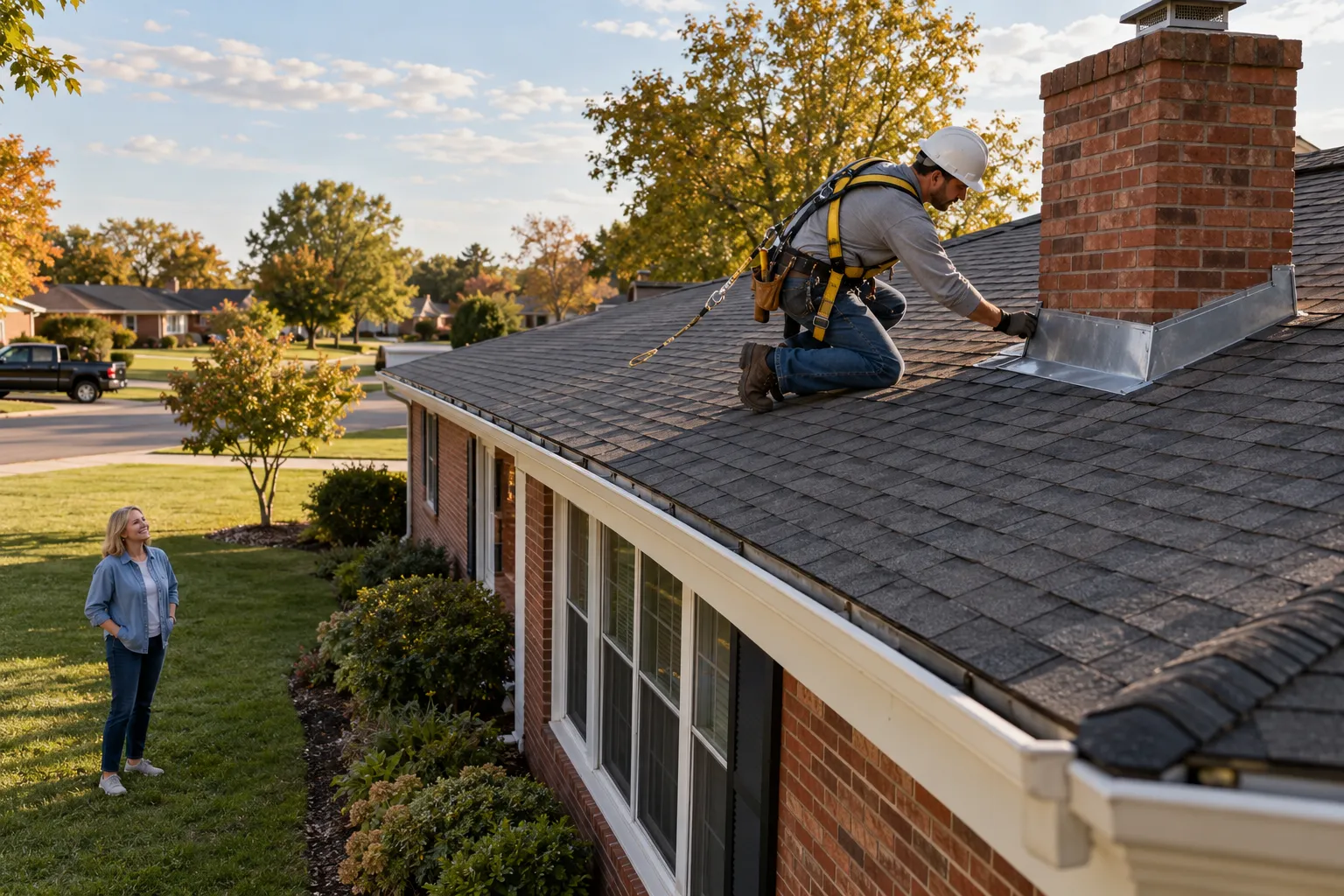
Found a stain on the ceiling or a few shingles in the yard? Take a breath. Most roof problems start small. What matters is how quickly you notice them and what you do next. This page walks you through what happens in the first hours, the first days and the first weeks after a roof starts to fail.
Femalesevidence Roofing is a referral service. We do not do the roofing work. We connect homeowners in Friendswood and the Friendswood area with independent local roofing contractors who handle repairs, and who can tell you honestly when a repair is not enough. You get a clear picture, a written quote to compare, and no pressure to decide on the spot.
Is Water Coming In Right Now?
If you see drips, a spreading stain or a sagging ceiling, you are in the first hour of a roof problem. Move belongings out of the way. Put a bucket under the drip. Keep clear of any ceiling that bulges. Then take photos. They help later when you talk to a provider or your insurer.
This is the stage where emergency roof repair makes sense. Request a callback to check provider availability, or use the request form and tell us what you see.
What Happens in the First Few Hours?
Water follows gravity and finds the easiest path. It slips under a lifted shingle, runs along a rafter and drops somewhere far from the real hole. That is why the stain is rarely right under the leak. Insulation soaks it up like a sponge, and the damp spot quietly widens.
What Happens by Day Two or Three?
Wet wood and insulation do not dry fast in humid weather. Our hot, wet summers make it worse. Drywall starts to soften and paint may bubble. A musty smell is a sign that moisture is sitting in the attic. This is the time to get a roofer out for a look.
What Happens After a Week or More?
Now the damage is no longer just a leak. Roof decking can swell and soften. Mold can start to grow on damp surfaces. A small flashing fix can turn into a bigger job. Check the timeline: the longer water sits, the more a simple repair can grow.
Can I Cover It Myself Until Help Arrives?
Sometimes a tarp helps, but climbing a wet roof is risky. Do not do it during rain, wind or lightning. From the ground, you can manage the inside: catch drips, move furniture, and poke a tiny hole in a bulging ceiling so trapped water can drain into a bucket. Leave the roof work to a provider.
What Repairs Do Providers Usually Make?
Most repair visits fall into a few groups:
- Replacing cracked, curled or missing shingles
- Resealing or replacing flashing around chimneys and walls
- Swapping worn vent boots and pipe collars
- Patching small holes
- Replacing a damaged patch of decking
How Does a Roofer Find the Leak?
A good inspection starts inside. The provider checks the attic for wet spots, dark stains and daylight where there should be none. Then they trace the water uphill to the source. Outside, they look at flashing, seals, valleys and nail heads. Ask them to show you photos of what they find.
What About Storm Damage Repair?
Heavy downpours and tropical storm season can lift shingles and push rain sideways under them. After a storm, scan from the ground for missing pieces, debris and sagging lines. Storm damage repair often needs quick tarping first, then a proper fix once the roof is dry. Some policies may cover sudden damage, so check your policy. Providers can often help document damage for a claim.
Is Hail Damage a Repair or a Replacement?
Hail leaves bruises, cracked shingles and loose granules. A few hits may be a simple repair. Widespread damage can mean hail damage roof replacement is the sounder choice. Ask a provider to explain what they see and show you where.
Should I Repair or Replace?
Repair usually makes sense when damage is limited and the rest of the roof is sound. Replacement may fit better when leaks keep returning, shingles are brittle across the whole roof, or the roof is near the end of its life. Ask for both options in writing and compare.
Does My Roof Type Change the Repair?
Yes. Asphalt shingles are the easiest to patch. Metal needs the right fasteners and sealants. Tile can crack when walked on, so a provider needs care. Flat sections around ranch homes drain differently and need close attention to seams.
Why Does Heat Matter for Repairs?
Very hot attics bake shingles and dry out sealants, so older patches can fail. Providers often check attic airflow during a repair visit. It is a fair question to ask.
How Do I Choose Among Local Roofing Contractors?
Pick providers who explain their work in plain words. Ask about license and insurance, and ask for proof. Get a written quote that lists materials, labor and cleanup. Be wary of anyone who pushes you to sign right away.
What Should I Ask Before I Sign?
One step at a time. Ask who does the work, what the warranty on the work covers, how they protect your home if rain arrives mid-job, and what happens if they find more damage. Ask before you sign.
Request a callback to talk through your situation and see which local providers are available.
What's Included
Leak Source Inspection
A provider checks the attic and roof surface to trace water back to where it actually enters.
Shingle Repair
Cracked, curled or missing shingles are replaced so water stops getting under the surface.
Flashing and Vents
Worn seals around chimneys, pipes and walls are resealed or replaced, a common leak spot.
Storm Damage Fixes
Providers can tarp the roof, repair wind and hail damage, and help document the damage for a claim.
Typical Roof Repair Costs
Roof repair prices depend on roof size, pitch, materials and how much damage is hiding underneath. These are typical U.S. ranges only. Your own job may land outside them, so always get a written quote before work begins.
| Repair item | Typical range | Notes |
|---|---|---|
| Replace a few shingles | $150 – $500 | Small, easy-access areas |
| Flashing repair | $200 – $800 | Chimneys, walls and valleys |
| Vent boot or pipe collar | $150 – $600 | Common cause of leaks |
| Leak repair with patching | $300 – $1,500 | Depends on how hard the source is to find |
| Emergency tarping | $300 – $1,000 | Temporary cover until a full repair |
| Storm damage section repair | $500 – $3,000 | Larger if decking is wet or damaged |
How It Works
Tell Us What Happened
Describe the leak, stain or storm damage by phone or through the request form. Photos help.
Get Matched With a Provider
We connect you with an independent local roofing provider who handles the kind of repair you need.
Review the Written Quote
The provider inspects the roof and gives you scope, materials and price in writing.
Choose and Schedule
Pick the provider and timing that suit you. The provider does the work, not us.
Why Call Femalesevidence Roofing
Plain Answers
We explain what a roof problem means and how urgent it is, in simple words, before you decide anything.
Local Providers
You are connected with independent roofing contractors who work in your part of the area.
No Pressure
You compare written quotes at your own pace. There is no obligation to hire anyone.
Honest Advice
Providers can tell you if a repair is enough or if replacement is the smarter move.
Other Services
Need home roof repair in Friendswood?
Have a roof question? Request a callback to check provider availability, or send a request and tell us about your home and your roof.
No obligationHome Roof Repair FAQ
How fast should I get a roof leak fixed?
As soon as you can. Water spreads into insulation, wood and drywall within hours and days, and mold can follow within a week or so. Cover the inside with buckets, take photos, and ask a provider about quick tarping while you plan the full repair.
Can a leaking roof be repaired or does it need replacing?
Many leaks are fixable with a repair, especially when damage is limited. If the roof is old, brittle, or keeps leaking in different spots, a provider may suggest replacement. Ask for both options in writing.
Does homeowners insurance cover roof repair after a storm?
Some policies may cover sudden damage from storms or hail, but not wear and tear. Check your policy and deductible. Providers can often help document damage with photos and notes for your claim.
Reach a local provider
Have a roof question? Request a callback to check provider availability, or send a request and tell us about your home and your roof.
No obligation